Introduction
Financial literacy in youth is becoming increasingly important in today’s fast-paced world. Young people who understand basic financial concepts like budgeting, saving, and investing are better equipped to make smart decisions with their money. Without proper financial literacy in youth, many risk falling into debt, poor spending habits, or missed opportunities for building wealth. Teaching financial skills early not only empowers individuals but also helps create a generation that is financially responsible and confident.
This is why financial literacy for youth is becoming increasingly important. Financial literacy means having the knowledge and skills needed to manage money wisely. It helps young people make informed financial decisions, avoid unnecessary debt, and build a stable financial future.
Research from the Organisation for Economic Co-operation and Development shows that many students still lack basic financial skills, even though they regularly use digital payments and online shopping.
In this article, we will explore why financial literacy is essential for young people and how it can shape their future success.
What is Financial Literacy?
Financial literacy refers to the ability to understand and effectively use financial skills such as:
- Budgeting
- Saving money
- Managing debt
- Investing
- Financial planning
A financially literate person can make smart decisions about spending, saving, and investing.
For example, a student who understands compound interest may start investing early, which can significantly increase their wealth over time.
You can learn more about financial literacy concepts from resources like
Investopedia and
World Bank.
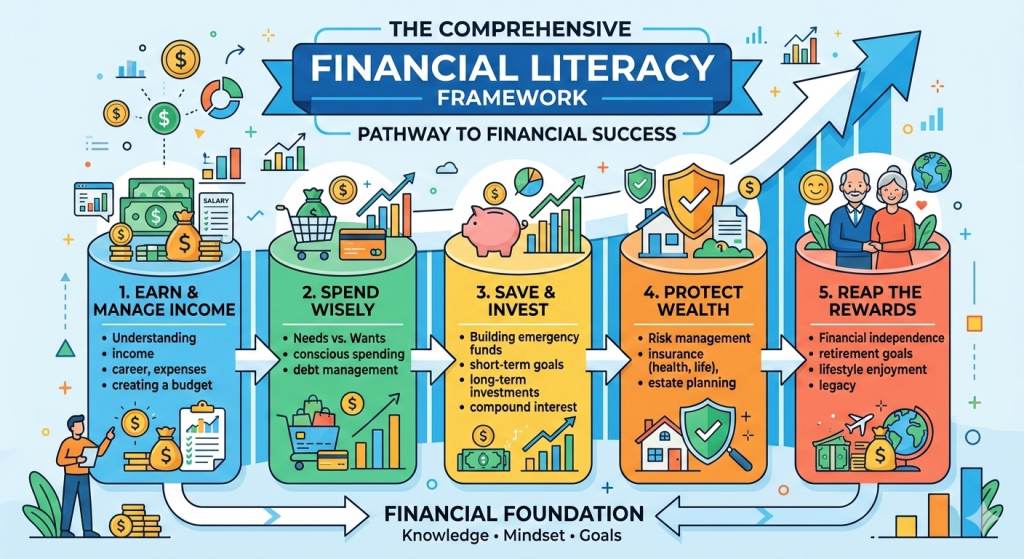
“Financial literacy concept diagram (budgeting, saving, investing)”
Why Financial Literacy Is Important for Youth?
Young people face many financial decisions early in life. These decisions include managing pocket money, choosing student loans, using credit cards, or investing savings.
Without financial knowledge, these decisions can lead to serious financial problems.
According to research by the Organisation for Economic Co-operation and Development, students with better financial literacy are 72% more likely to save money and make responsible financial choices.
Financial literacy helps young people:
- Understand the value of money
- Avoid unnecessary debt
- Develop good financial habits
- Plan for long-term goals
1. Helps Youth Make Better Financial Decisions
Financial literacy enables young people to make smarter financial choices.
For example:
Imagine two students receiving a monthly allowance of $100.
Student A spends all the money on entertainment and shopping.
Student B saves $40 every month and invests it in a simple savings account.
After one year:
- Student A has no savings
- Student B has $480 plus interest
This small habit can make a huge difference over time.
Financial literacy teaches young people how to:
- control spending
- prioritize needs over wants
- make long-term financial plans
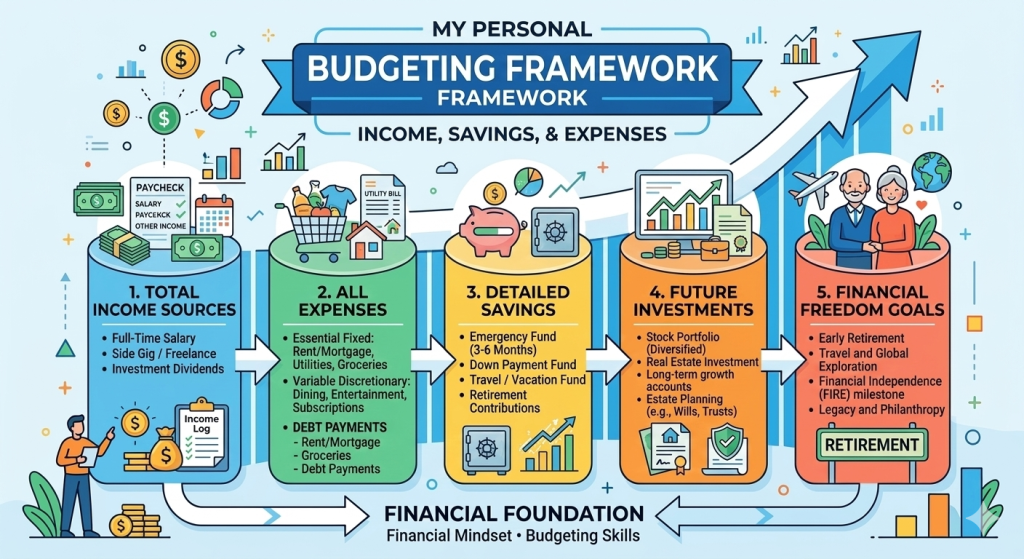
“Budgeting chart showing income, savings, and expenses”
2. Prevents Debt and Financial Stress
One major problem among young adults is debt due to poor financial decisions.
Many young people use credit cards or online payment services without understanding:
- interest rates
- repayment obligations
- credit scores
As a result, they may fall into a cycle of debt.
Financial education helps young people understand:
- how loans work
- how interest accumulates
- how to manage credit responsibly
This knowledge reduces financial stress and helps maintain financial stability.
3. Encourages Saving and Investing Habits
Another major benefit of financial literacy is the development of saving and investing habits.
Many wealthy individuals emphasize the importance of starting early.
For example:
If a 20-year-old invests $100 per month with an annual return of 8%, they could accumulate tens of thousands of dollars by retirement.
Young people who understand basic financial concepts such as:
- compound interest
- risk and return
- diversification
are more likely to build wealth in the long run.
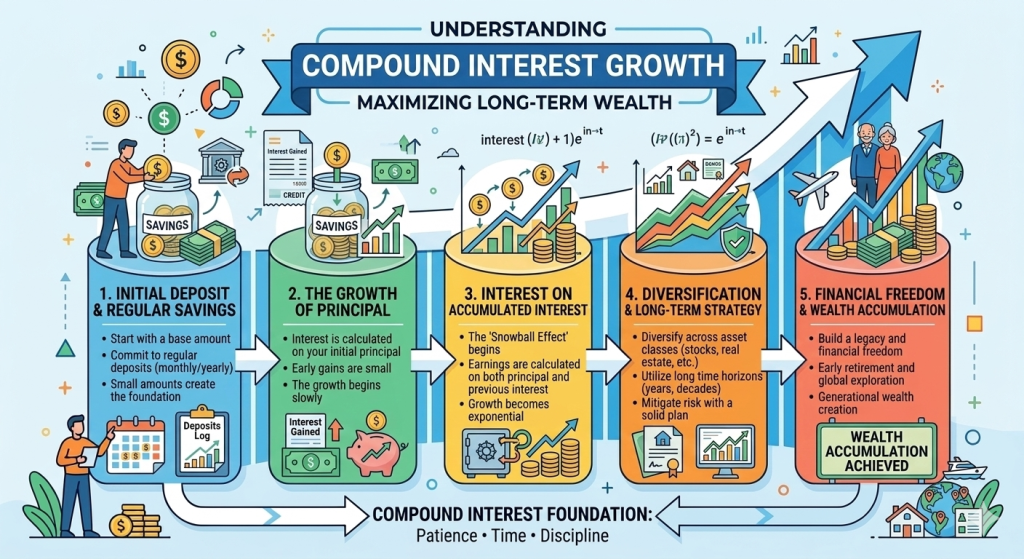
“Compound interest growth chart over time”
4. Protects Youth from Financial Scams
Today’s digital world has increased exposure to financial fraud and scams.
Young people often use:
- online banking
- digital wallets
- cryptocurrency platforms
Without financial knowledge, they may become easy targets for scams.
Experts emphasize that financial literacy helps young people identify risky financial offers and avoid fraud.
For example:
If someone promises “double your money in one week,” a financially literate person will recognize this as unrealistic.
5. Builds Financial Independence
Financial literacy also helps young people become financially independent.
Instead of relying on parents or others, financially educated individuals can:
- manage their own budget
- pay bills responsibly
- plan for major life goals
This independence is essential for adulthood.
For example:
A financially literate young professional will know how to:
- allocate income for rent and expenses
- build an emergency fund
- invest for future goals

“Young person planning finances with laptop and notebook”
6. Supports Long-Term Economic Stability
Financial literacy is not only important for individuals but also for society.
When citizens understand financial concepts, they are more likely to:
- save money
- invest in businesses
- participate in financial markets
This contributes to economic growth and financial stability.
Studies show that people with strong financial knowledge are more proactive in managing their finances and planning for the future.
As economies become more complex and digital, financial education will become even more important.
How Youth Can Improve Financial Literacy?
Young people can improve financial literacy through simple steps:
- Learn basic budgeting skills
- Track income and expenses
- Read books and financial blogs
- Follow reliable financial education platforms
- Start saving and investing early
There are also many free online resources such as:
- World Bank financial education resources
- Investopedia financial tutorials
These platforms provide valuable financial knowledge for beginners.
Conclusion
Financial literacy is one of the most essential life skills for today’s youth. In a world where financial decisions become increasingly complex, young people must understand how money works.
Financial education helps individuals make better financial decisions, avoid unnecessary debt, build wealth, and achieve financial independence. It also protects them from financial scams and prepares them for future economic challenges.
By learning financial skills early, young people can build a strong financial foundation that will benefit them throughout their lives.
Simply put, financial literacy is not just a useful skill—it is a necessity for the future.